
In 2019, if you asked “How many people use Medicaid?” to 10 people at the Center for Medicaid and CHIP Services (CMCS), you would hear 10 different answers.
This troubled leaders at the government agency that spends nearly $2 billion annually on keeping Americans healthy. CMCS is the Medicaid side of CMS (the Centers for Medicare and Medicaid), it collects reams of data – about 8 petabytes annually – on how the funds it sends to state health programs are managed. Strikingly, few people at the agency had the means to actually use that data to understand how the money was affecting health outcomes.
CMCS enlisted my team of designers, data engineers, and security specialists to build a system that would allow agency analysts to answer big and often very nuanced questions about Medicaid spending and health outcomes.
My role was HCD Lead on a project that became known as DataConnect. My job was to shepherd human-centered design efforts on a team of 40 people to create a self-service platform for CMCS staff to sift data and answer questions that guide health policy for millions of Americans.
My team began by sketching our overall goals for the project, using digital whiteboard tools and copious note taking; I facilitated conversations with agency and team leaders to develop work-streams for data engineering, data security, and product design, underpinned by user research and a development roadmap.
We adopted a “bite – snack – meal” messaging approach to grow a data mindset at CMCS:
Bites were quick, easily digestible bits of data, delivered in quarterly emails with engaging visuals and infographics.
Snacks were linked to from bites, showing the underlying data behind the infographics and a detailed description of how the data was parsed.
Meals were the original, unfiltered datasets that supported bites and snacks, which could be sliced and diced with robust data analytics tools.
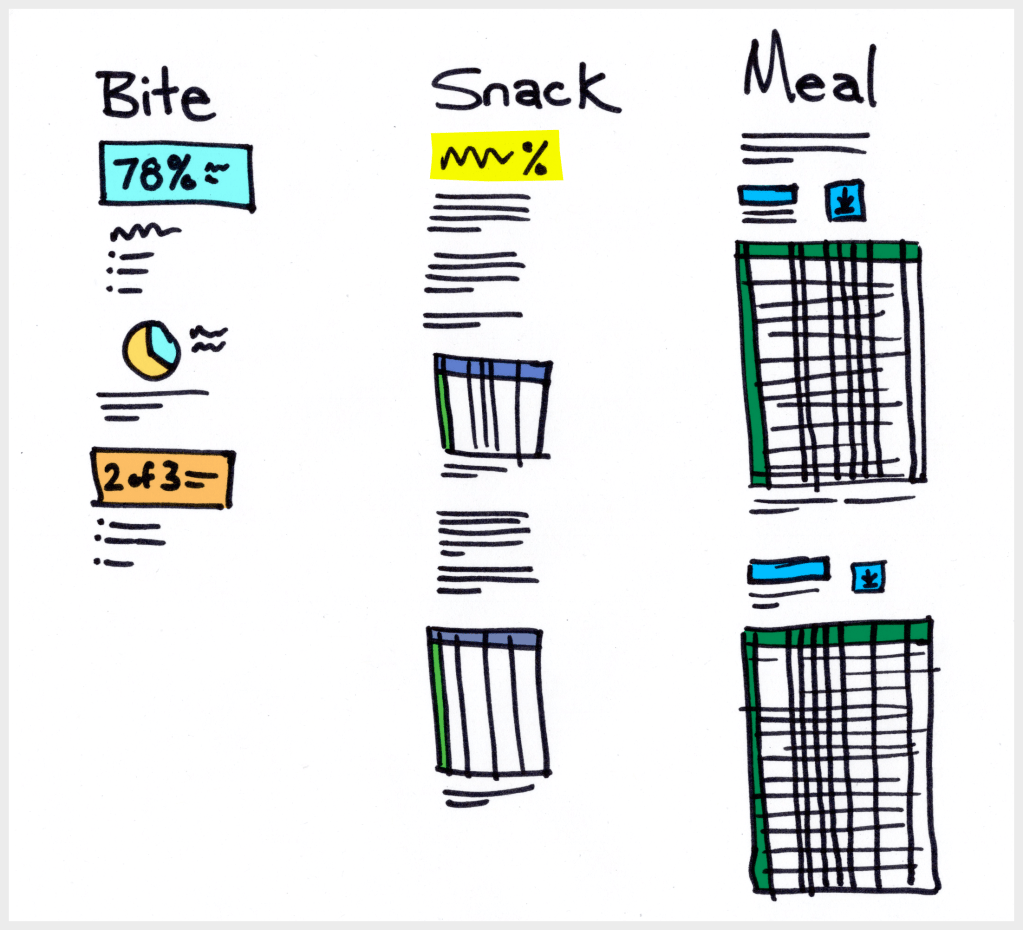
Link to Data Spotlight (requires password).
This tiered approach encouraged people to scrutinize their own process for using data, it showed them ways to ask meaningful questions, and it illustrated the power of weaving data into a narrative. We also adopted user personas to keep our users, their pain points, and motivations top of mind as we developed the service.
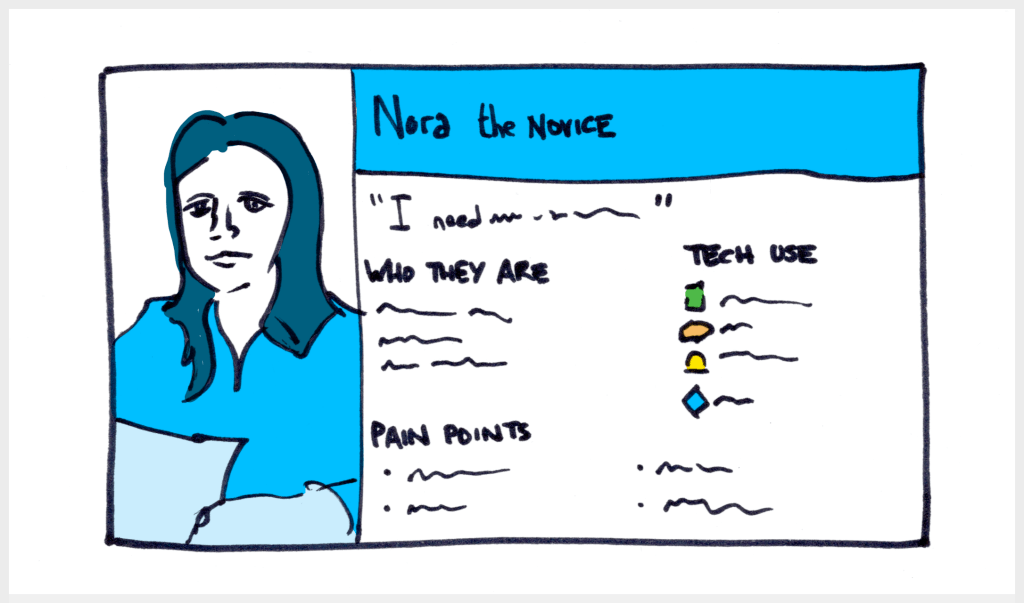
Link to DataConnect Personas (requires password).
Outcomes
After four years of progress, DataConnect has become a modern, cost-efficient, cloud-based data layer to meet the business needs of CMCS users, maintaining the highest level of security for over 8 PB of sensitive data. We migrated the platform to a Databricks E2 architecture, and built a Help Desk to support analytic teams.
Our platform resulted in a 30% reduction in data errors, 40% faster onboarding of new data, significant reduction in manual tagging and rework, increased trust via machine-enforced governance, as well as:
350+
Federal staff and contractor users
~100
Analytics-ready dashboards generated monthly
22,000
Quicksight
dashboard views
Project Statistics
Role: Human-Centered Design Lead (at Bixal)
Dates: Sept. 2020 – Dec. 2022 (contract ends in 2026)
Client: Center for Medicaid and CHIP Services (CMCS, a division of CMS, part of HHS)
Skills and methods: Presentations · Strategic roadmaps · User behavior · Workshops · Personas · Group facilitation · Visual communication · Process design · Client relations · Team leadership · Constructive feedback · Co-creation · Service Blueprints · Design Research · Creativity Skills · Video production · Design Thinking · Agile design sprints
Top image by Aiden Frazier on Unsplash



 Russell Flench