

Prostate cancer is the second most common cancer in the U.S., causing an estimated 35,250 deaths in 2024 (source: NIH). To improve treatment options, the pharmaceutical manufacturer Medivation, in collaboration with Astellas Pharma, developed an oral therapy which showed promising results, however adoption was slower than expected. The company suspected this was due to complex specialty pharmacy protocols, and they hired my firm to investigate the factors influencing the adoption of oncology interventions nationwide.
After eight weeks of in-depth customer research and data synthesis, my research team developed a framework for Medivation to assess oncology clinics and identified four key drivers to improve how it markets novel oral therapies.
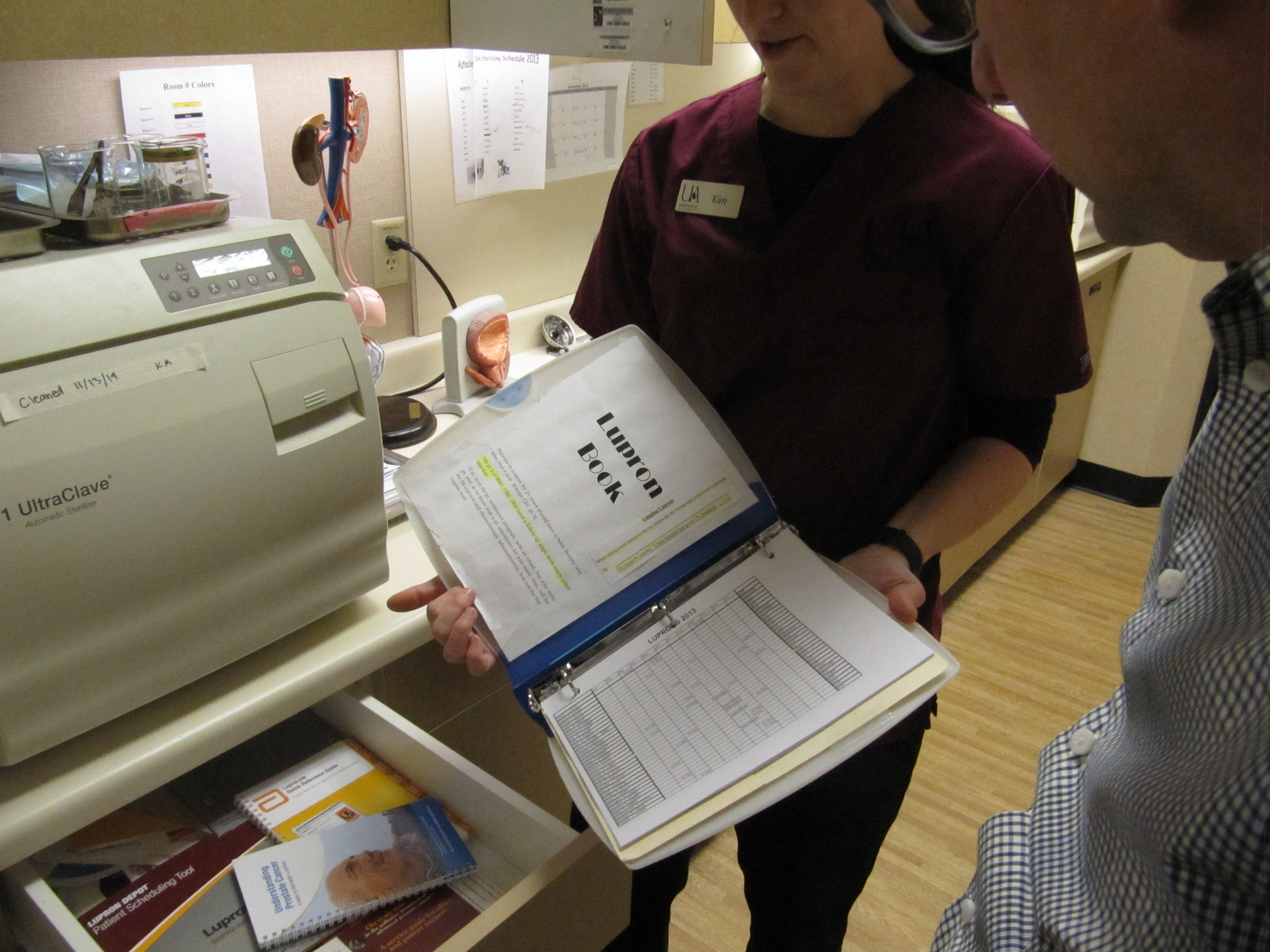
My team interviewed physicians and clinical staff at 9 urology offices, ranging in size and complexity from independent solo practices, to mid-size clinics, to multi-office clinics with multiple hospital affiliations. We asked about their processes and perceptions around medical oncology and about interactions with specialty pharmacy. What we heard surprised us and challenged our initial hypothesis.
Doctors discussed how they learn about new therapies and how they advise patients on treatment options. Support staff told us about their clinical protocols, including those around specialty pharmacies, and about interactions among practice physicians and affiliate offices.




Insights from clinic visits pointed to four key opportunities for Medivation to pursue that would help the company meet providers and patients where they are. Insights and recommendations are confidential to Medivation.

The video I produced can be viewed here (requires password).
Outcomes
My team documented profiles of the nine urology clinics we interviewed, and summarized the characteristics of each to create a baseline for subsequent assessments.
We created process diagrams indicating pain points and blockers along the way, and highlighted what worked in favor of Medivation’s goals.
Finally, we produced a short video with clips from research interviews with clinicians, and we described four levers which could be used to increase adoption.
Medivation’s oral therapeutic ultimately proved to be a clinical and commercial success, and in 2016 the company was acquired by Pfizer for $14B.
My role was as a design researcher, first supporting and then leading participant interviews. I helped create the research plan, documented site visits, and collaborated on data analysis. I then led data synthesis, development of recommendations and the final report, and video production. I’m grateful for the mentorship and humbled by the trust granted to me by my leader, Gary Waymire at the research firm Point Forward on this project.
Project Statistics
Role: Design Researcher, Point Forward (Redwood City, CA)
Dates: October 2013 – January 2014
Client: Medivation / Astellas Pharma
Skills and methods: Design research · User interviews · Visual communication · Team leadership · Co-creation · Video production · Design thinking
Top image by Annie Spratt on Unsplash.



 Russell Flench