

“Sitting is the new smoking.” That was the headline coming from research about the long term health effects of working in offices. To Steelcase, a legacy manufacturer of office furniture, it sounded like a challenge. How might Steelcase create products that promote, rather than degrade, good posture?
The effects of working in modern offices is not trivial. A recent study reported…
“…Physical inactivity has become the fourth leading risk factor of mortality,” and that
“People with sedentary behaviors have 20-30% higher risk of all-cause mortality than those who almost regularly practice moderate-intensity physical activities.” (1)
Steelcase hired me and a grad school colleague to conduct research into the reasons office workers choose and use office chairs. We spent 4 weeks interviewing and observing people working in different office environments across North America and Europe, and we came away with stories about how our modern work culture – including the ways we furnish it – still has a long way to go to meet people’s natural behaviors and their bodies’ needs.
An observation framework
To support this research, my colleague Parminder Kaur and I developed an observation framework we dubbed SOMA PIE:
S – Services
O – Objects
M – Messages / media
A – ActivitiesP – People
I – Interactions
E – Environments

We used this model as a guide to taking notes, photographs, and interviews with office workers about their work habits.

Our work spanned 18 companies in North America and Europe, and we deployed remote research studies at 4 offices in Southeast Asia. The research included a range of small, mid- and large-sized companies across a variety of industries and corporate cultures.
Does this look familiar?
One thing we noticed everywhere – whether working alone throughout the day or collaborating with colleagues – was that good posture was not people’s natural inclination.

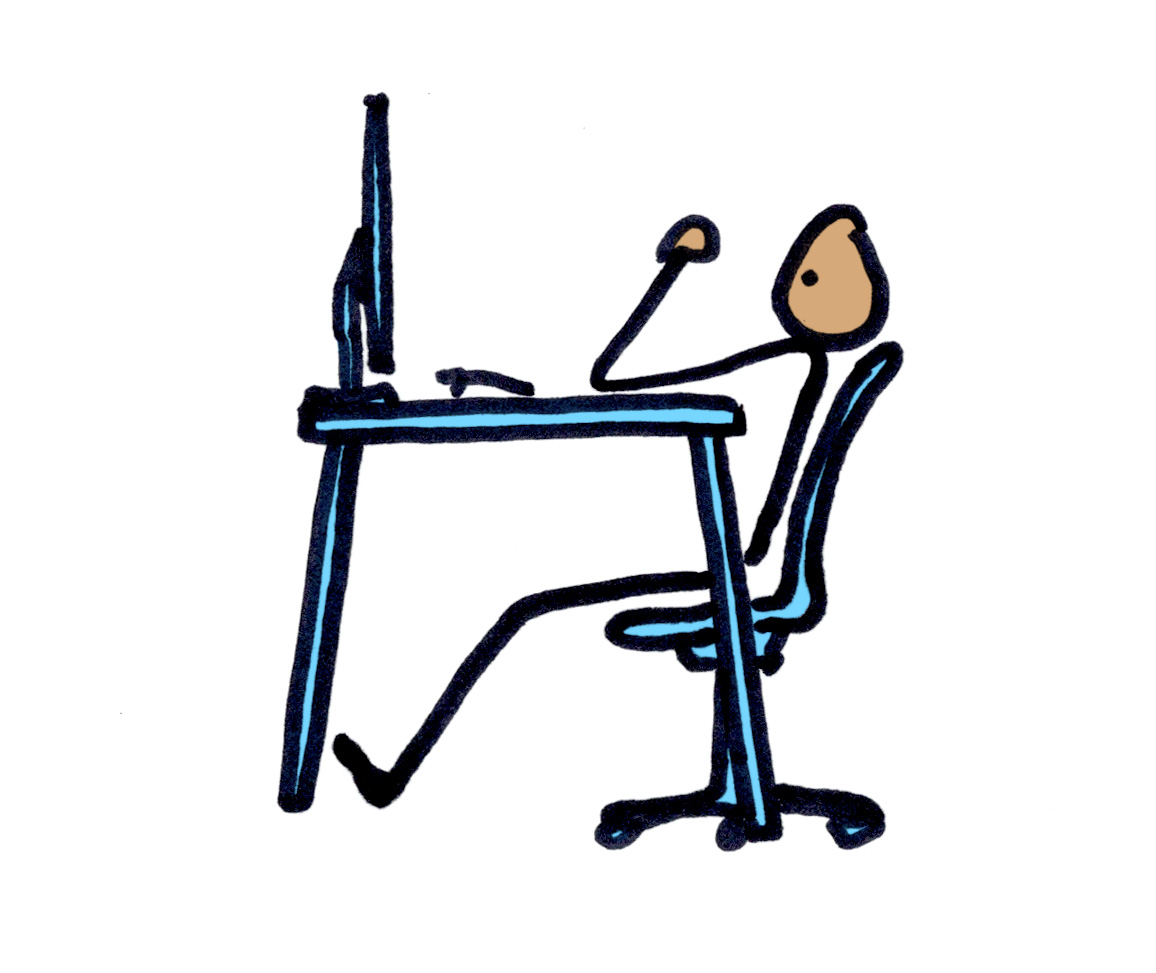

The hunch
The slouch
The crunch
Even when people had high-end office furniture, they rarely felt able to take advantage of their adjustments. Rarely did facilities personnel show people how to adjust furniture to fit people’s needs.
Wellbeing at work
Through our on-site research, we came to see Work as the intersection of three factors:
Tasks (the job to be done)
Corporate culture (the social structure within a company)
Space (the physical environment)
These factors directly affect each other, and together they influence people’s wellbeing at their jobs.

As a manufacturer of office environments, Steelcase could impact work spaces most directly. (In fact, my division at Steelcase was called “Workspace Futures.”)
One photo from our field research caught widespread attention at Steelcase headquarters. In a large corporate office building in England, one employee had neatly printed a sign they left at their desk each day after work that read, “Please don’t adjust my chair settings. Thanks.”

When people found office chairs they liked, they protected them however possible. Workers at most locations told us they didn’t know whether their furniture was adjustable, or how to make adjustments, or if they were allowed to.
Permission to stretch
Equally important to employee wellbeing are the permissions workers perceive in the company culture. When people feel they are allowed to behave in ways that support their health and well-being, they take advantage of those opportunities.
During one site visit, we were told how when one team member initiated “stretch time” everyone else in the group got on board. People didn’t feel embarrassed or out of place, since it was decided as a group that this behavior was acceptable, even beneficial. In this way, the company culture was influenced from the ground up.

Permissions also cascade down from leadership. At one large UK company, workers told us about a corporate policy intended to keep people from sitting at their desks for too long. Every 60 minutes, their computers would go to sleep for a few minutes, resulting in people getting up from their desks, walking around, and engaging with colleagues.
These permissions and influences reinforce each other in the right work culture. At a site visit in the US, we learned how when management noticed some employees were biking to work, they responded by providing shareable bikes for the whole office, so that more people could enjoy the benefits of cycling.

In most cases, work (tasks) are subservient to good posture. People just want to get their work done, often at the expense of physical wellbeing. This was how we framed the challenge for Steelcase as we delivered our research report to leadership.
Outcomes
Ultimately, our research pointed to key takeaways that Steelcase could apply.
- Workers need to be empowered to make their office space and furniture work for them, not the other way around.
- Communication strategies play a large role in this, from design cues in the furniture itself, to product packaging and set-up information, but especially from interactions with colleagues and facilities staff.
- Our report detailed these points as “How might we…” statements to provoke further discussion at Steelcase.
My role was as a design research intern, and my purview was broad. My grad school colleague and I designed a 30-person kickoff workshop to quickly give us a baseline understanding of stakeholders’ orientation to posture at Steelcase’s research, design, and marketing divisions.
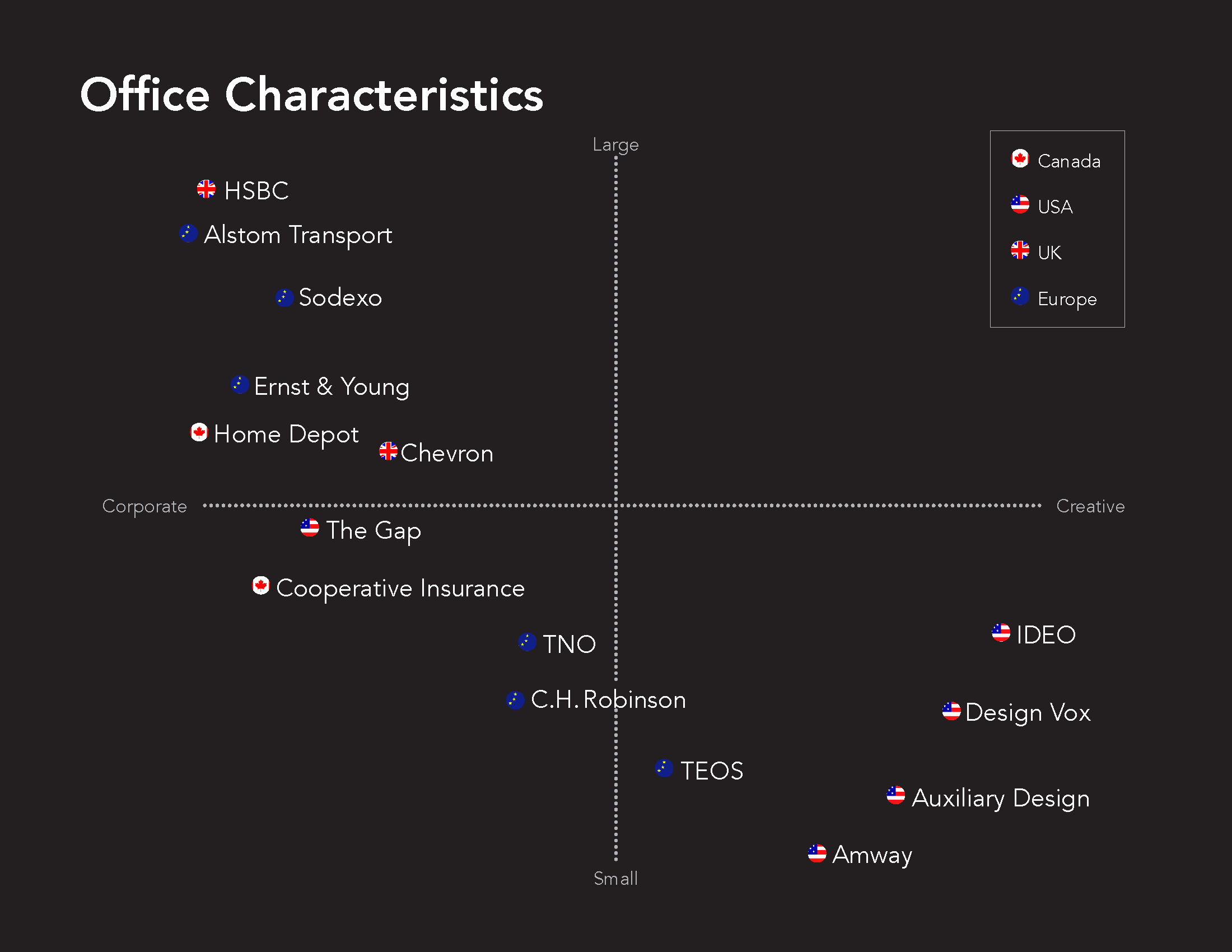
Steelcase’s vast network of sales reps helped coordinate site visits and employee interviews at companies like Chevron, HSBC, The Gap, and IDEO. Our research was followed by 3 weeks of data analysis and synthesis and a formal presentation to executive leadership.
Follow-up work: China and “food coma”
Steelcase asked me to conduct follow-up research at several companies in China. Our goal was to learn if the trends we noticed in Western companies were also present in the East. Until then, Steelcase was primarily concerned that IP infringement would prevent market penetration in Asia. However my research pointed to other factors worthy of consideration.
After one morning of interviews and observations at a large tech firm, our hosts took us to lunch. When we returned to the office, what we saw was completely unexpected.
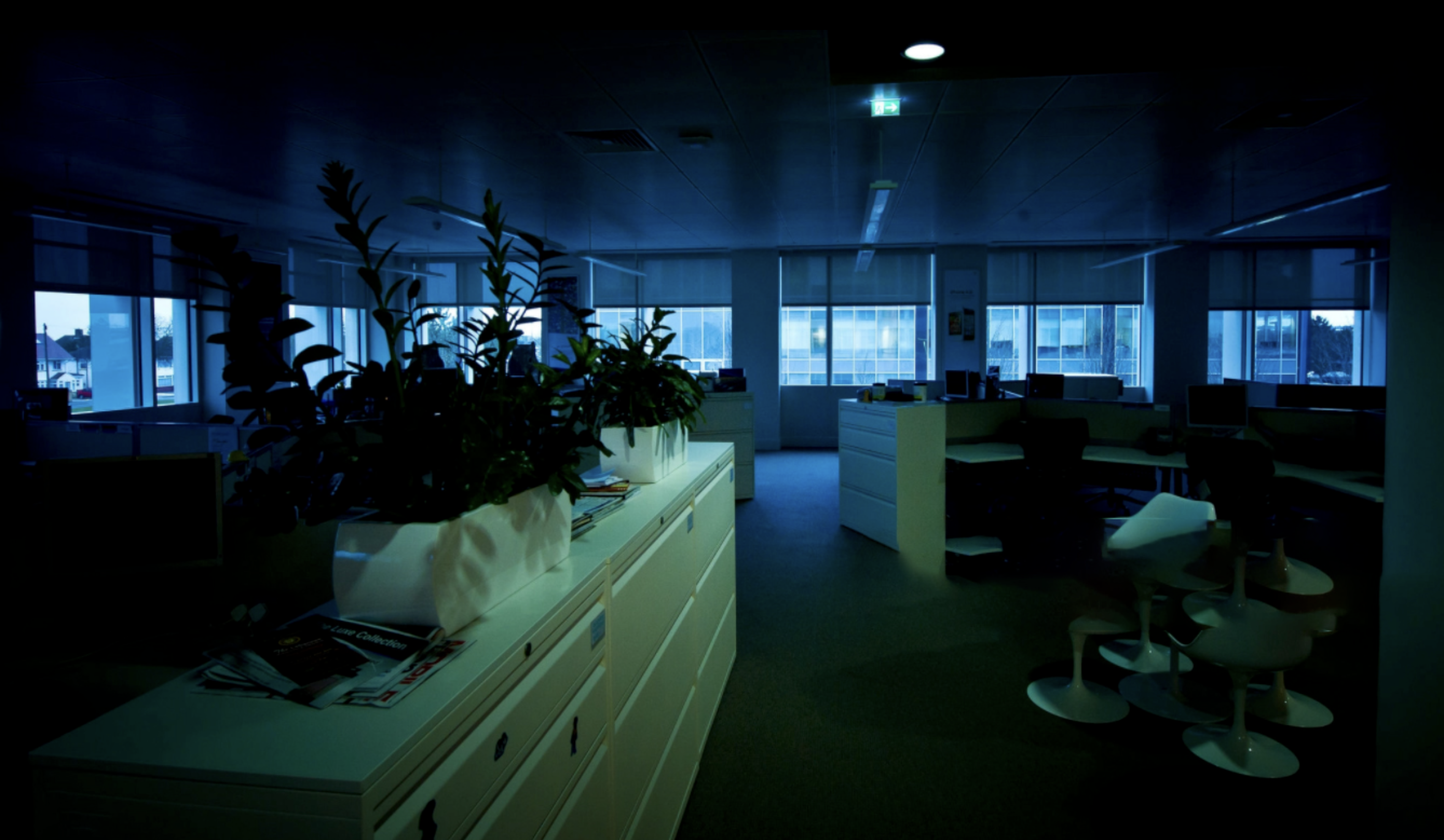
Inside, all the office lights were off. Employees who had returned from lunch were at their desks napping! Wrapped in blankets, reclined in their office chairs with footrests and headrests extended. Our hosts told us, “Yeah, people get tired after lunch. You know, ‘food coma.’”
Instead of fighting people’s natural needs and behaviors, this Chinese company embraced them. This insight highlighted additional opportunities for Steelcase to explore. How might our products meet people where they are at work? What features are needed? What messaging? What support services?
Personal reflection
If you’re reading this, there’s a good chance that your work environment includes a computer which sits on a desk in front of a chair at which you spend 8+ hours most days of the week. Many of your colleagues likely have a similar arrangement.
If you’re lucky, your desk raises and lowers so that you can stand to work, and your computer has a screen that can be positioned at eye level to avoid neck strain. But in 2012, those amenities were more the exception than the rule, especially among Western office workers.
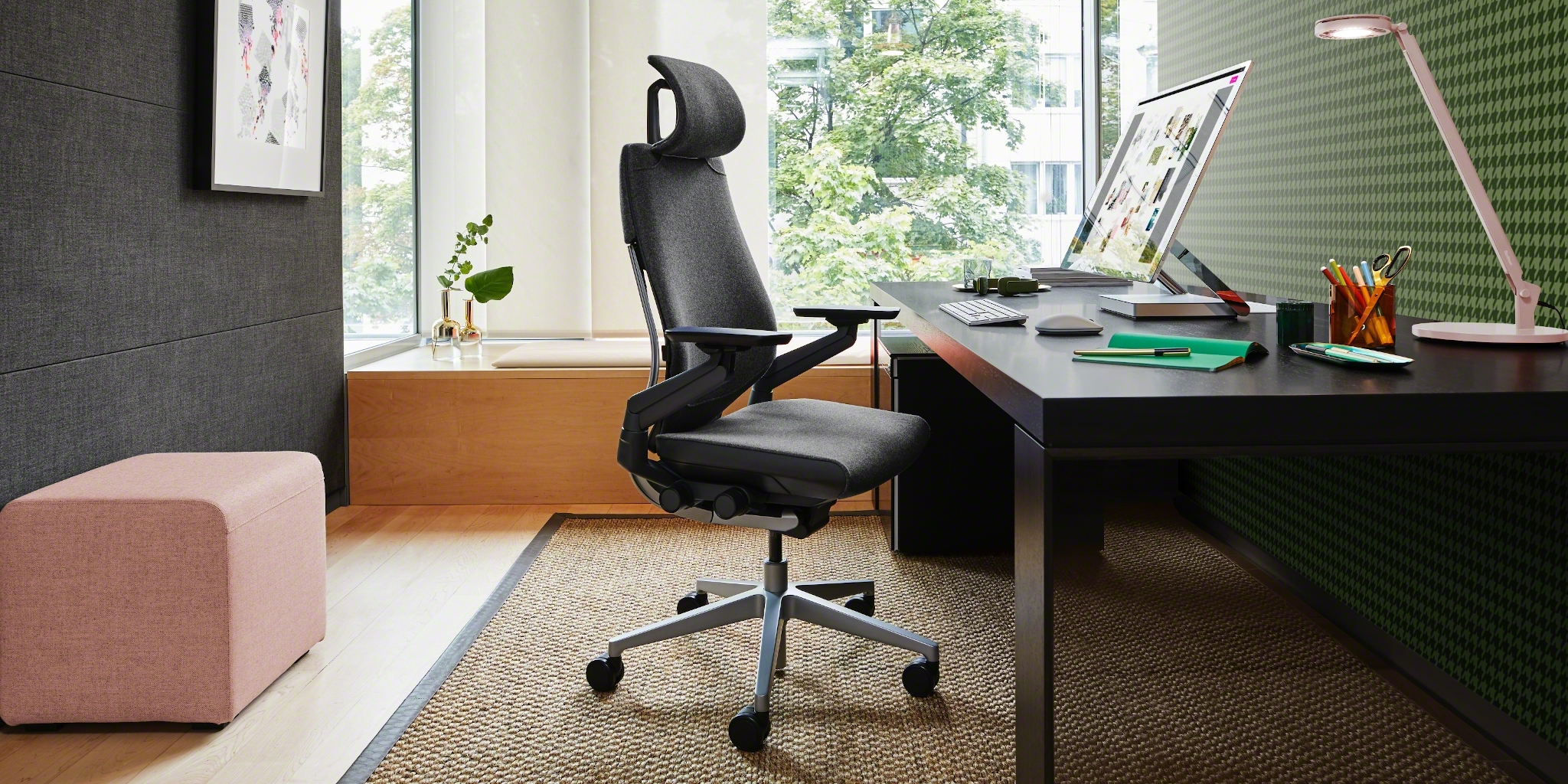
When I was setting up my own home office in 2021, I looked on the NY Times Wirecutter product review site for chair recommendations. Their top pick was the Steelcase Gesture, the chair that my research supported, and this made me feel proud, and that my work there had impact.
Project Statistics
Role: Design Research Intern
Dates: May 2012 – May 2013
Client: This was a summer internship that extended to a full year at Steelcase, in Grand Rapids, Michigan and Chicago, Illinois.
Skills and methods: Design research · User interviews · Presentations · User behavior · Workshops · Customer journey maps · Personas · Group facilitation · Visual communication · Team leadership · Constructive feedback · Co-creation · Creativity skills · Video production · Design thinking
(1) “Sitting is the New Smoking” by Dr. Sanchari Sinha Dutta, Ph.D. https://www.news-medical.net/health/Sitting-is-the-New-Smoking.aspx
Top image by Annie Spratt on Unsplash. Dark office image by Ian Gavin.


 Russell Flench