

When drivers were surveyed about what was most important to them about the cars they drove, they didn’t say a powerful engine, good gas milage, or even stylish design. The most important thing drivers cited was safety.
Fiat-Chrysler Automobiles (FCA, now Stellantis) asked my design team to unpack that response.
What attributes conferred a sense of safety to drivers?
Cars were already packed with a variety of modern technology, sensors, and structural engineering; NHTSA and IIHS granted their highest safety ratings to many of FCA’s vehicles.
Didn’t those things count to the driving public?
My research team dived deep into the topic of driving safety and delivered customer insights and recommendations for FCA to better serve its target markets across its portfolio of vehicles.
Step 1: Learning About Risk Theory

Link to Safety report highlights (requires password).
My team consulted with Paul Slovic, PhD, a leading academic in the field of risk and decision-making, who explained that…
People’s perception of risk (and, thereby, safety) does not come from rational reasoning.
His work set the foundation for our inquiry on this customer research project.

Step 2: Learning from Real People
We then spent time with drivers themselves:
110 hours of conversation with
36 people in
3 large, medium, and small-size markets.
We asked about their experiences in vehicles, we toured their cars and had them drive us around their towns.
My job as a design researcher spanned all facets of the project including:
- Crafting a participant recruitment screener and interview guide
- Interviewing participants and client stakeholders
- Conducting qualitative data analysis and synthesis
- Designing visual communication like participant snapshots and video vignettes from the interviews
- Talking and thinking through what we observed and translating that into meaningful insights and recommendations.
Outcomes
The results of our field research pointed to three main factors that drivers use to judge safety (all of which are confidential to FCA), and within the third factor we described three sub-categories of heuristics people use when making decisions about vehicle safety.
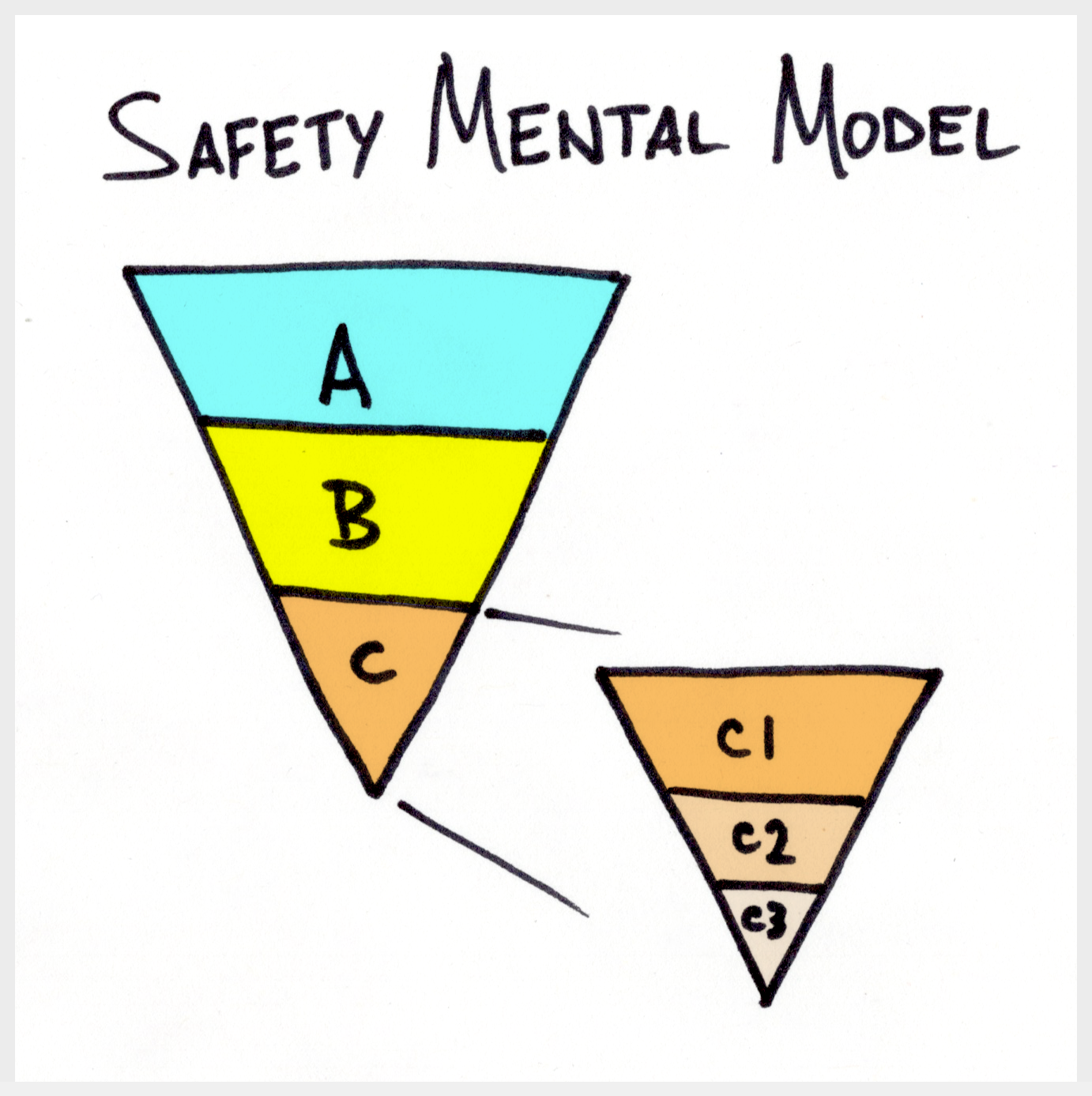
Link to Safety report highlights (requires password).
We diagrammed people’s mental model of driving safety, showing the hierarchy of safety factors, and provided examples from research to illustrate real-life use cases of each.
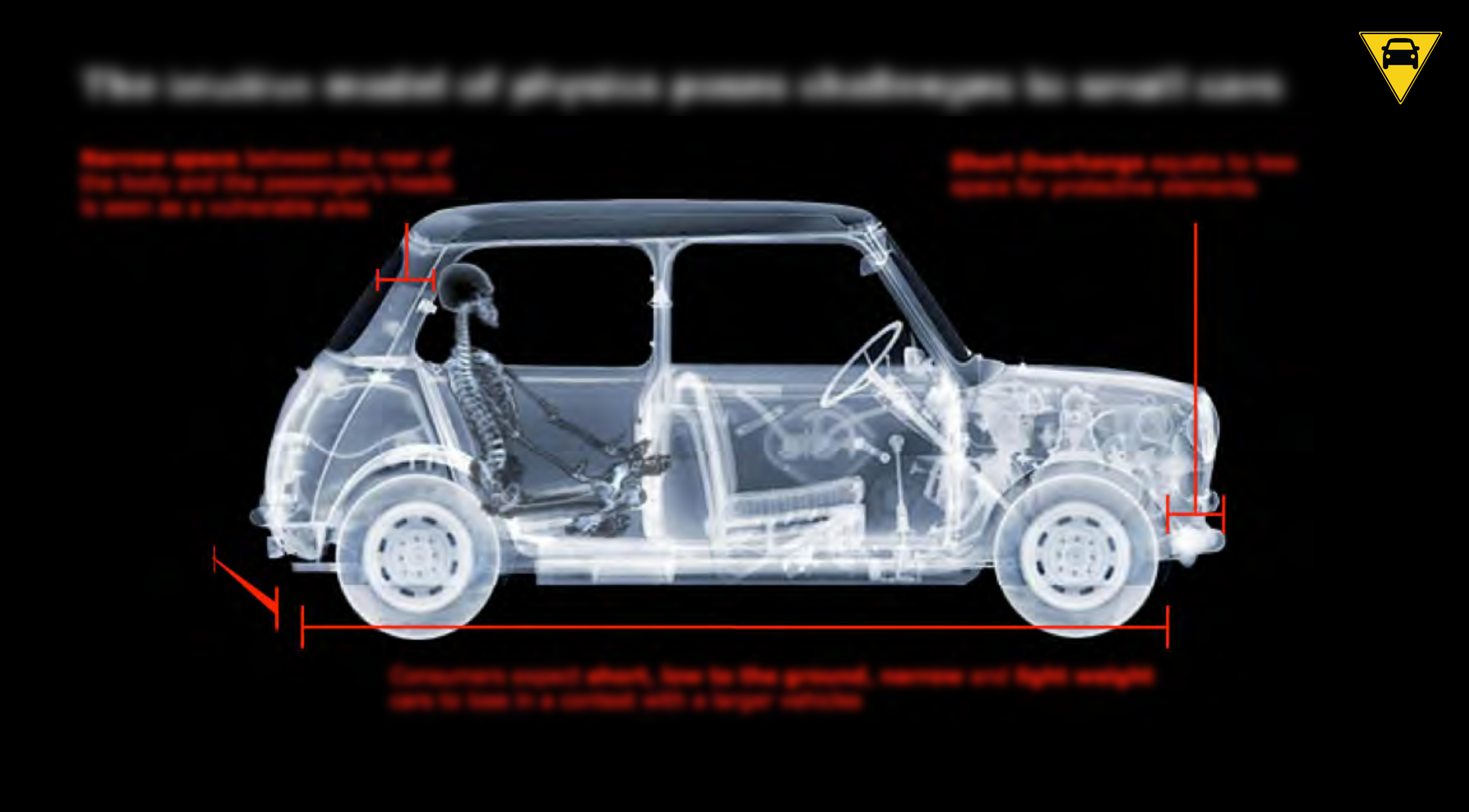
I created video vignettes of participant interviews to make the examples come to life.

We then created a detailed research report with design recommendations created collaboratively with our client over the course of two weeks.
Project Statistics
Role: Design Researcher (at Point Forward, in Redwood City, CA)
Dates: July 2013 – Nov. 2013
Client: Fiat-Chrysler Automotive (now Stellantis)
Skills and methods: Customer interviews · Data analysis and synthesis · Presentations · Video production · Workshop facilitation · Visual communication · Process design · Client relations · Team leadership · Constructive feedback · Co-creation · Service Blueprints · Design Research · Creativity Skills · Video production · Design Thinking · Agile design sprints
Top image: Jan Baborak on Unsplash


 Russell Flench